Tomato Varieties and
Types of Tomatoes
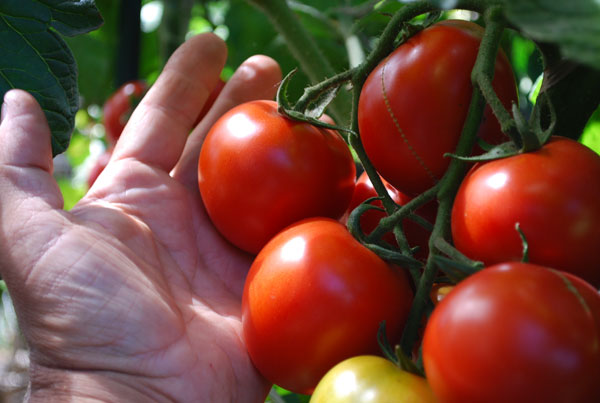
There are hundreds of tomato varieties. From marble-sized grape or cherry tomatoes, to juicy salad tomatoes, meaty paste tomatoes, and huge, sweet, beefsteak tomatoes--the kind you slice in slabs bigger than a slice of bread. Their colors range from deep crimson to orange, yellow, green, purple, and chocolate.
|
|
© Steve Masley…Click IMAGE to Enlarge |
Determinate Tomatoes are bush types that grow 2-3 feet (60-90cm) tall, then the buds at the ends of all the branches form flowers instead of leaves. They flower all at once, set and ripen fruit, then stop fruiting and senesce.
Indeterminate Tomatoes are vining types that need caging or staking for support, but will continue to grow and set fruit until frost kills them. They’re generally later than determinate tomatoes, and produce larger crops over a longer period.
For the home gardener, mixing types of tomatoes spreads the fresh tomato harvest over the longest possible season. Plant quick-maturing determinate or early indeterminate tomato varieties for early summer tomatoes, and salad or beefsteak tomatoes for mid- and- late-summer harvest. If you like thick, rich tomato sauces, be sure to include some sauce tomatoes in the mix.

All seeds featured on this site are non-GMO.
Organic seeds are, by definition, non-GMO. Most varieties featured here are organic, but some varieties are only available as non-organic seed. Don't let this prevent you from trying a variety that looks interesting.
NOP (National Organic Program) guidelines allow the use of non-organic (but not GMO) seeds when organic seeds for that variety are not available. The way the plants are grown (without chemical fertilizers, pesticides, herbicides, or fungicides) is the primary determinant of whether they're grown organically.
Links to buy seeds go to seed companies that offer that variety. We are affiliates of High Mowing Seeds, Territorial Seeds, and True Leaf Market. We receive a commission on seed orders you place to these companies (the commission comes from the company, so you pay the same whether you click on our link or order directly from the company).
Commissions help pay for maintaining and updating this web site. Links to other seed companies are provided as a service, we receive no commission from them, but they're keeping heirloom tomato varieties alive, and we support them. Links open in new windows.
We have grown, and continue to grow, most of the tomato varieties curated below. All are vetted by us personally, and endorsed by our clients' repeated requests for them over many years. Photos are from our gardens.
Cherry
|
Salad
|
Roma (Paste)
|
Beefsteak
Hybrid vs Heirloom Tomatoes
|
Growing Tomatoes
Tomato Varieties by Type of Tomato
Cherry and Grape Tomatoes
|
|
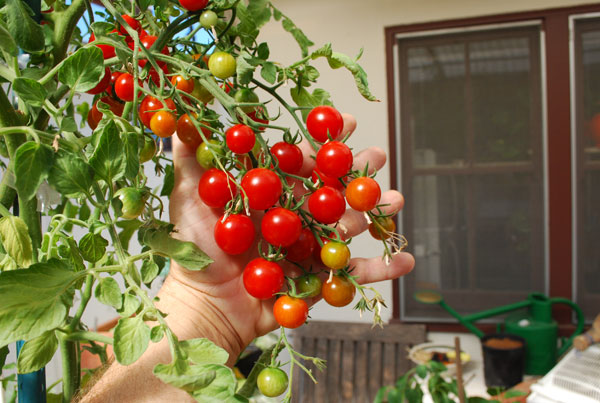
‘Sweet 100’ © Steve Masley …Click IMAGE to Enlarge |
If you’re growing tomatoes for the first time, or growing tomatoes in pots, Cherry Tomatoes are a good place to start. Cherry and grape tomatoes are small, usually less than 1” (2.5cm), and grow in large clusters.
Cherry tomatoes are generally the best choices for cool, alpine, maritime, or short-summer gardens, and small fruit size means they’re more suitable if you’re growing tomatoes in containers. They tend to have better disease resistance than larger tomato varieties, and they're more forgiving of drought stress and poor soil.
They’re also a hit with toddlers and kids, so if you’re trying to instill an appreciation for fresh foods in your kids, growing cherry tomatoes is a good start.
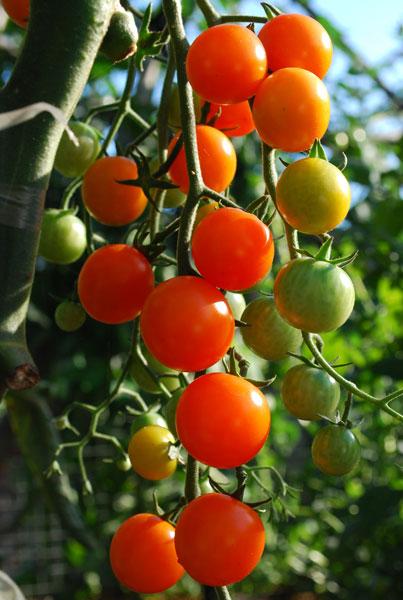
‘Sungold’ © Steve Masley
…Click IMAGE to Enlarge

‘Sungold’ (F1 hybrid, Indeterminate, 65 days, resistant to verticilium and fusarium wilts 1 and 2) produces sweet, orange, 1” (2.5cm) tomatoes that are perfect for salads. Its vigorous, indeterminate vines start producing early, and keep producing till first frost. It's the one tomato all our clients insist of having, year in and year out.
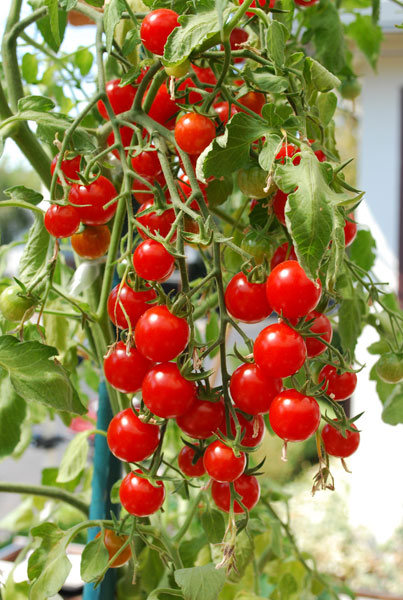
‘Sweet 100’ © Steve Masley
…Click IMAGE to Enlarge

‘Sweet 100’ (F1 hybrid, Indeterminate, 65-70 days) is a great-tasting, prolific cherry tomato. The vigorous indeterminate vines produce dozens of irresistibly sweet, bite-sized tomatoes on long trusses.
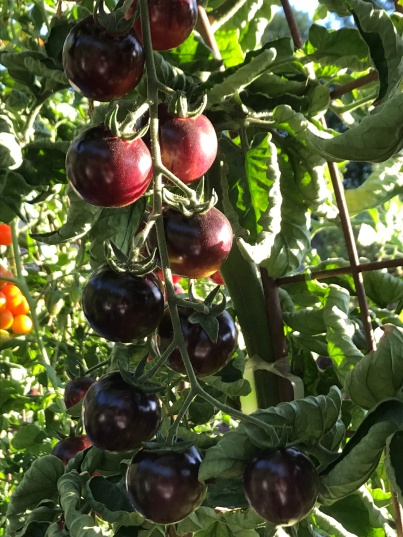
‘Black Strawberry’ © Steve Masley
…Click IMAGE to Enlarge

‘Black Strawberry’ (Heirloom—Open Pollinated, Indeterminate, 70 days) has large clusters of 1”, deep purplish-red fruit with true tomato taste, not just sweetness. Great resistance to diseases for an heirloom tomato.
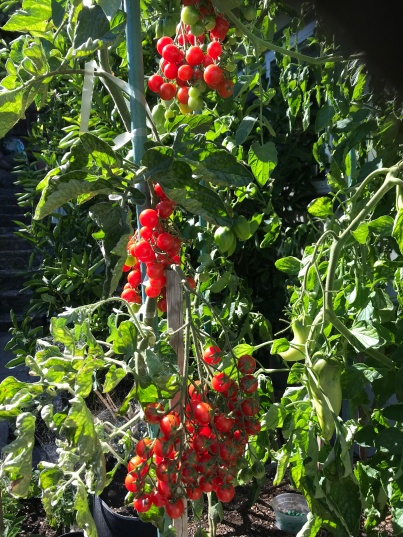
‘Crokini’
© Steve Masley
…Click IMAGE to Enlarge

'Crokini' (F1 hybrid, AAS winner) is a prolific red cherry tomato that grows in huge trusses. Each perfect 3/4" globe is a burst of summer flavor with the perfect balance between sweet and tart. Even better, the fruit resists cracking, and they're one of the few cherry tomatoes resistant to Late Blight.
Cherry
|
Salad
|
Beefsteak
|
Roma (Paste)
|
Hybrid vs Heirloom
Growing Tomatoes
Salad Tomatoes
|
|
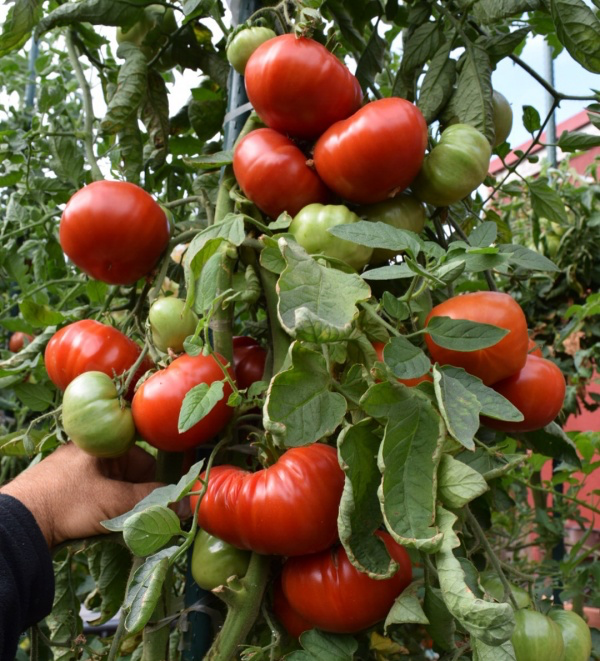
Romanesco’ © Steve Masley Click IMAGE to Enlarge |
Salad Tomatoes form 2-3” (5-7.5cm) diameter fruit, perfect for chopping into salads. They’re usually a little tarter and juicier than cherry tomatoes or beefsteak tomatoes, with some acid to balance their sweetness. Some have undertones of tropical fruits.
Salad tomatoes make a great, quick tomato sauce, sauteed with onions and garlic and a handful of freshly chopped basil or parsley at the end.
Salad tomatoes have more cultivars than any other type of tomato. Here are a few favorites:
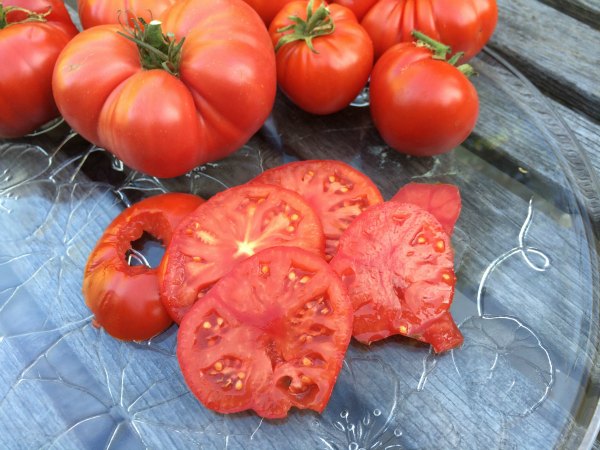
© Steve Masley
…Click IMAGE to Enlarge

‘Pantano Romanesco’ (Heirloom, Indeterminate, 70-75 days) became one of our favorite tomatoes after our first season growing it over a decade ago. Pantano Romanesco has the perfect balance between sweetness and citrussy tartness. Fruit size can vary between salad tomato size and beefsteak slicers, but they're equally delicious no matter their size.
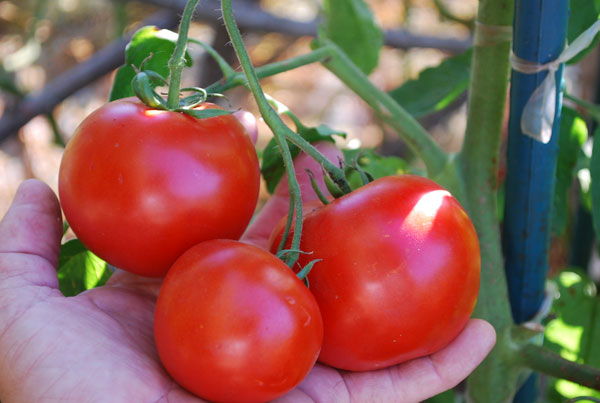
‘Carmello’ © Steve Masley
…Click IMAGE to Enlarge

'Carmello' (F1 Hybrid, Indeterminate, 65-70 days) is a midsize, 3-4” (7-10cm) tomato that produces early and keeps producing well into fall. They're great for both salads and sauces, and work well in cool summer, maritime, and short summer gardens. Carmello is one of the most disease resistant varieties we grow (resists Gray Leaf Spot, Tobacco Mosaic Viruses races 0-2, Verticilium Wilt, and has intermediate resistance to Root Knot Nematodes). It's among the most consistently productive tomato varieties we grow.
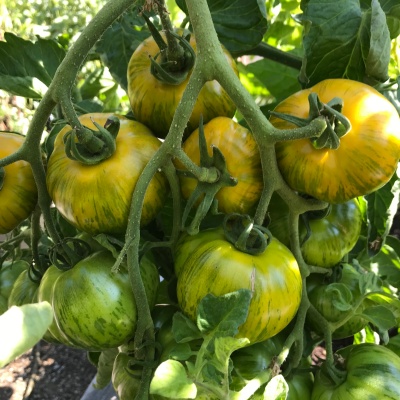
‘Green Zebra’ © Steve Masley
…Click IMAGE to Enlarge

‘Green Zebra’ (Heirloom, Indeterminate, 70-75 days) is a tart, pale green 2-4" (5-10 cm) tomato with darker green stripes that's among the best heirloom salad tomatoes. Tomatoes are ripe when the shoulders have a yellowish-orange cast, and the fruit has a slight give when gently squeezed, like a ripe avocado. Fast-growing indeterminate vines are shorter than most indeterminate varieties, so plant them in front.
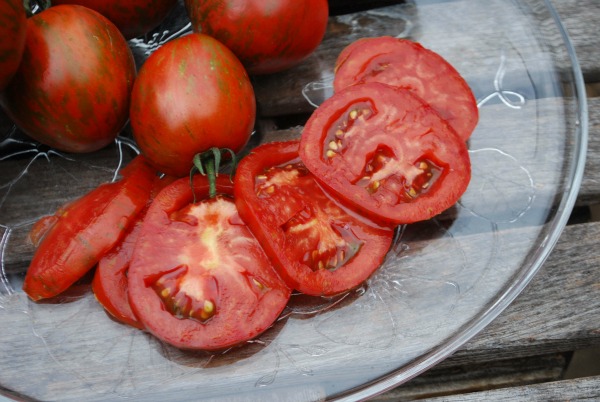
‘Purple Zebra’ © Steve Masley
…Click IMAGE to Enlarge

‘Purple Zebra’ (Heirloom—Open Pollinated, Indeterminate, 75-80 days) is similar to 'Green Zebra', but with deep, purplish-black flesh with red streaks, and great flavor. Slice in wedges for a beautiful addition to any salad. Vigorous indeterminate vines have good disease resistance for an heirloom.
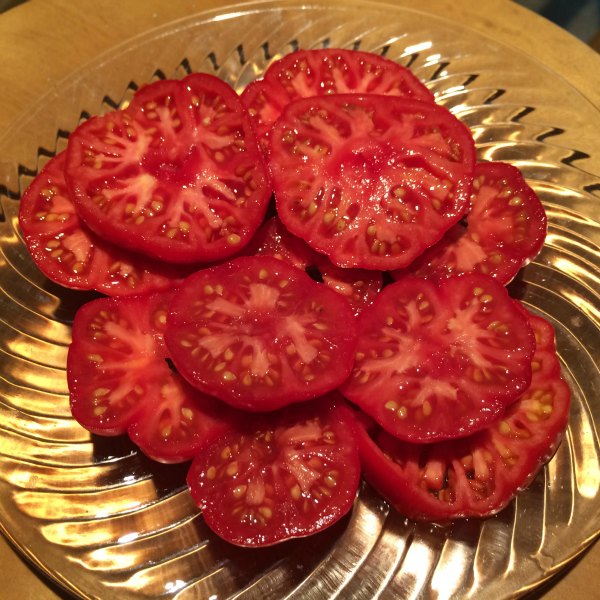
‘Costoluto Fiorientino’
© Steve Masley
…Click IMAGE to Enlarge

'Costoluto Fiorientino' (Heirloom—Open Pollinated, 80-85 days) is so heavily ribbed that it looks misshapen, but these are some of the juiciest, best-tasting tomatoes you’ll ever grow. These twisted, deep red tomatoes have orange shoulders when they’re ripe, so don’t leave them on the vine too long—usually not a problem since they’re so good! This tomato has great years and slightly off years, but remains a client favorite in spite of the variability.
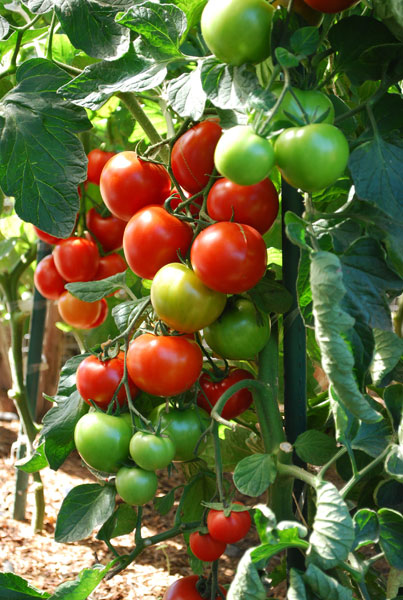
‘Sweet Clusters’
© Steve Masley
…Click IMAGE to Enlarge

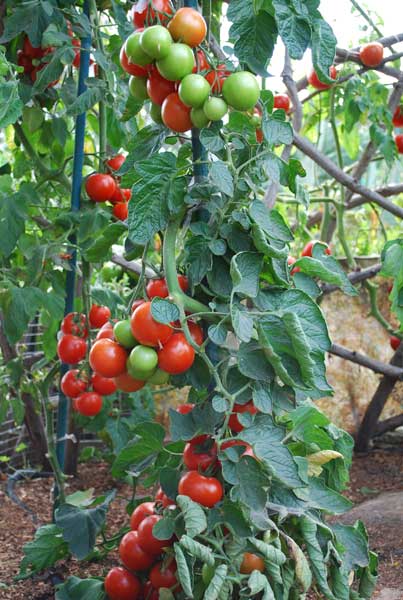
'Sweet Clusters' (F1 hybrid, Indeterminate, 65-75 days) is one of the hothouse tomatoes you see in big, pricey clusters in the middle of winter. Vine-ripened in the summer, it’s almost like a different fruit. Perfect balance between sweetness, tartness, and tomato flavor. This is probably the most consistently reliable tomato we've ever grown. When diseases hit other tomato varieties, this one keeps chugging along. The vigorous, disease resistant vines are easy to train ‘Italian Grandfather Style’.
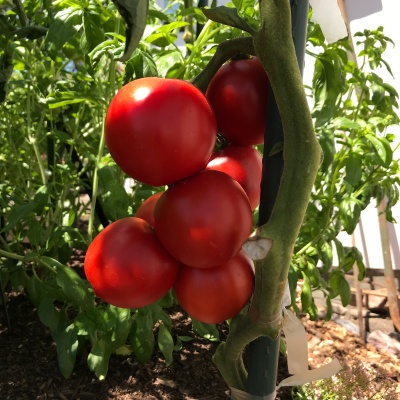
‘New Girl’ © Steve Masley
…Click IMAGE to Enlarge

'New Girl' (F1 hybrid, Indeterminate, 80 days) is an improved variety of 'Early Girl' that has greater disease resistance. It produces clusters of 1½-2” (4-5cm) deep-red fruits with just the right combination of sweetness and true tomato flavor, and is a great tomato for early harvest and remains one of the best tomato varieties for northern or cool-summer gardens.
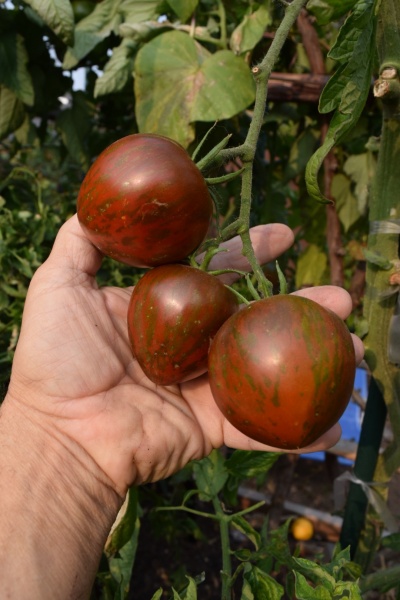
‘Pink Boar’
© Steve Masley
…Click IMAGE to Enlarge

'Pink Boar' (Open Pollinated Heirloom, Indeterminate, 72 days, is a reddish purple, full-flavored salad tomato from Brad Gates at Wild Boar Farms. Vigorous indeterminate vines that perform well in cool summer, short summer, and maritime gardens.
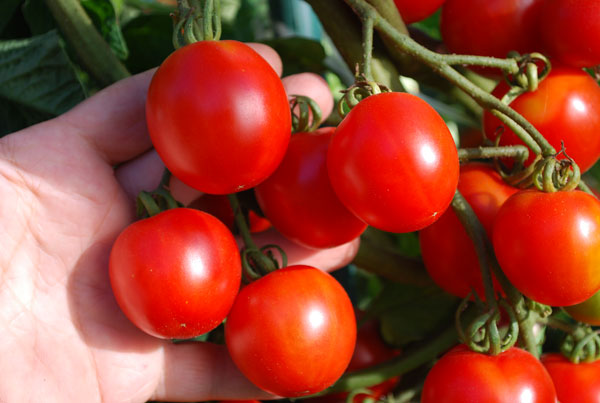
‘Stupice’ © Steve Masley
…Click IMAGE to Enlarge

'Stupice' (Heirloom—Open Pollinated, Indeterminate potato-leafed, 60-65 days) produces deep-red, 2” (5cm), oblong tomatoes. Starts early and produces continuously for the whole summer. One of the best tomato varieties for cool-summer gardens.
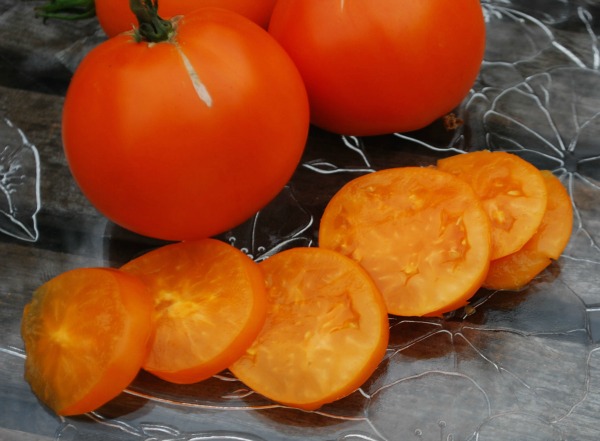
‘Valencia’ © Steve Masley
…Click IMAGE to Enlarge

'Valencia' (Heirloom—Open Pollinated, Indeterminate, 76 days) is a 2-3” (5-7.5cm) orange tomato with the texture—and flavor!—of a sweet, ripe mango, with a citrussy edge. Not too juicy, very few seeds. Indeterminate vines are shorter than most, so plant in front of taller varieties.
Cherry
|
Salad
|
Beefsteak
|
Roma (Paste)
|
Hybrid vs Heirloom
Growing Tomatoes
Slicer (Beefsteak) Tomatoes
|
|
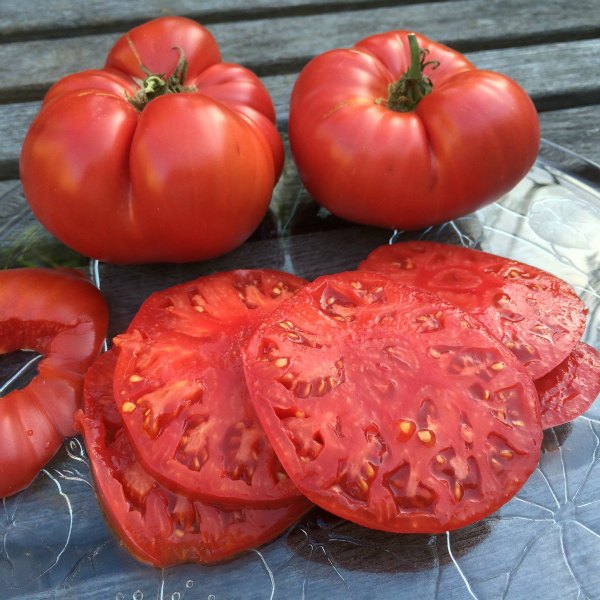
© Steve Masley…Click IMAGE to Enlarge |
Beefsteak Tomatoes, also called "slicers", produce large, heavy fruit. These are the big, thick, meaty tomatoes that are so prized for BLTs. Slice them in thick slabs for tomato sandwiches, Caprese Salad, or to top any sandwich in summer, or chop them in big chunks for salads. Some varieties reach 6” (15cm) in diameter, and can weigh in from 1-3 lbs (0.45-1.4 kg).
Beefsteak tomatoes need a longer growing season and more heat than smaller varieties, so they may not be suitable for short-summer, alpine, or cool-summer gardens.
‘Caspian Pink’ (Russian Heirloom—Open Pollinated, Indeterminate potato-leafed, 85 days) is a classic pink beefsteak tomato, juicy and sweet. My wife's favorite tomato. Very good disease resistance for an heirloom tomato, and consistently productive year after year, a rarity for an heirloom tomato. Fruit size averages 10-12 ounces. I lost the seeds we had saved in a move a few years ago, and have been looking for it ever since. I finally found a source at Urban Farmer.
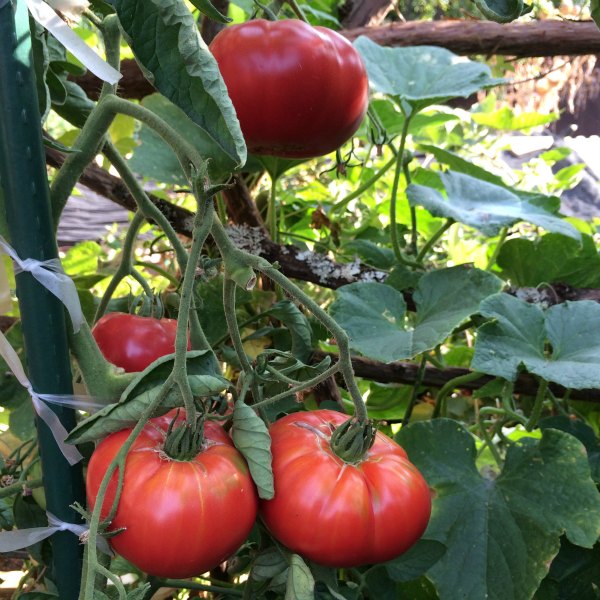
'Caspian Pink' © Steve Masley
…Click IMAGE to Enlarge

‘Pink Brandywine’ (Heirloom—Open Pollinated, Indeterminate potato-leafed, 85 days) is a classic beefsteak tomato. They have great flavor and consistently win tomato tastings, but they're hit and miss, sometimes we have a great year for them, sometimes they're not as stellar. That's one of the gambles you take with heirloom tomatoes. Even with this limitation, they remain a client favorite we grow every year.
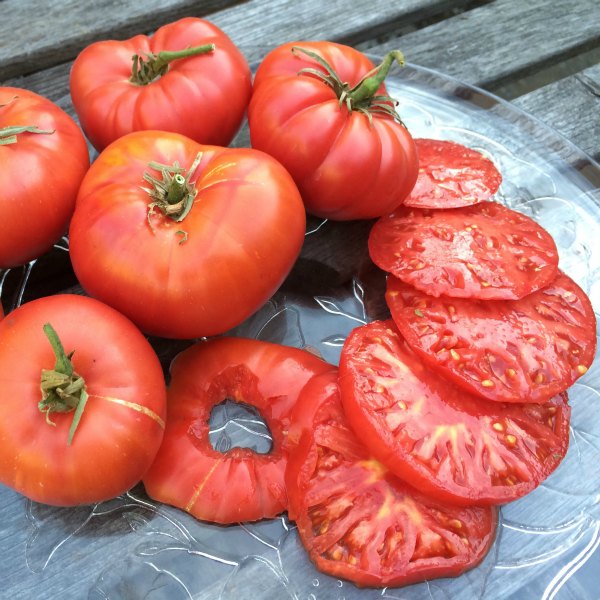
© Steve Masley
…Click IMAGE to Enlarge

‘Pink Berkeley Tie Dye’ (Heirloom—Open Pollinated, Indeterminate, 65-75 days) is a classic beefsteak tomato, and another consistent client favorite. Sweet and flavorful, they have the most gorgeous slices. Plants are vigorous and productive, with good disease resistance for an heirloom. Because of their earliness, they're a good beefsteak choice for short-summer gardens. Fruit size averages 8-12 ounces.
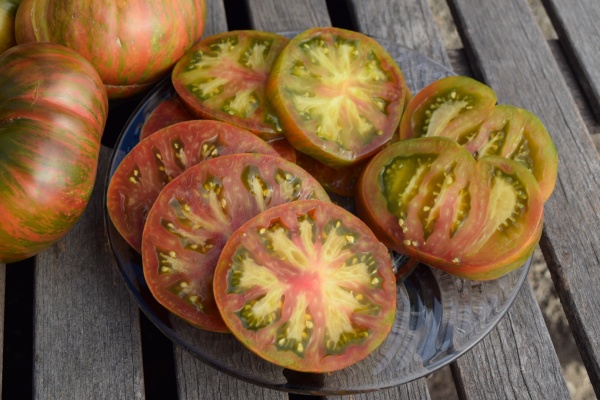
© Steve Masley
…Click IMAGE to Enlarge

‘Cherokee Purple’ (Heirloom—Open Pollinated, Indeterminate, 85 days) has a smokey sweetness that makes it a client favorite year after year. Plants are not as productive as other beefsteak varieties, but even clients with limited space request this variety. Fruits average 12-16 ounces.
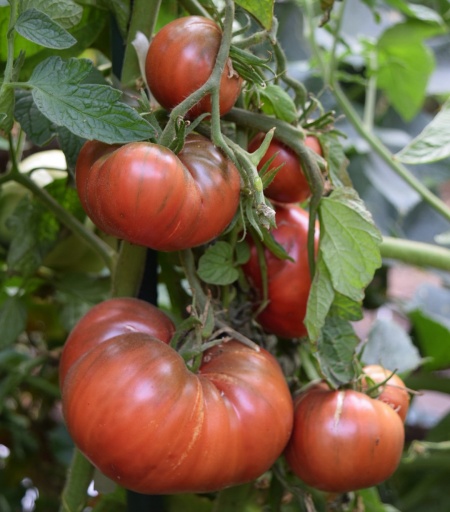
© Steve Masley
…Click IMAGE to Enlarge

‘Hillbilly’ (Heirloom—Open Pollinated, Indeterminate, 85 days) is an orange heirloom beefsteak tomato with red streaks through its flesh, almost like a peach. Beautiful sliced on a sandwich or cut in large wedges. Fruit size 1-2 pounds.
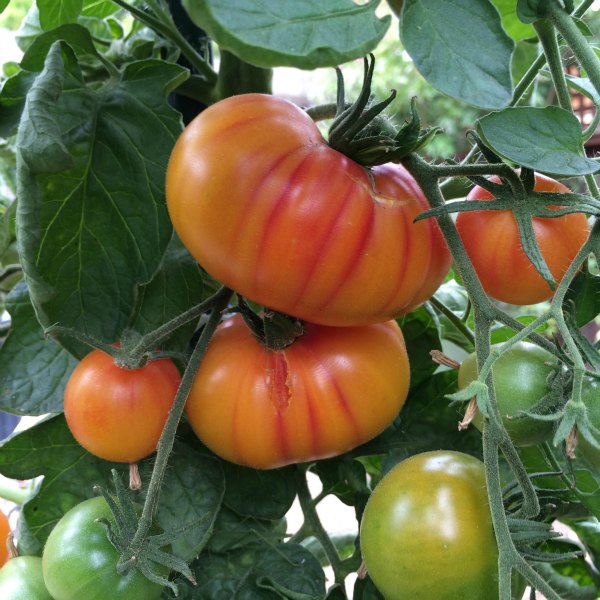
'Hillbilly' © Steve Masley
…Click IMAGE to Enlarge

‘Black Krim’ (Heirloom—Open Pollinated, Indeterminate, 85 days) is one of the most flavorful Russian heirloom beefsteak tomatoes. Large, sweet, reddish-purple fruits are beautiful sliced or cut in wedges. Harvest when shoulders are still green for best flavor. Fruit size 6-11 ounces.
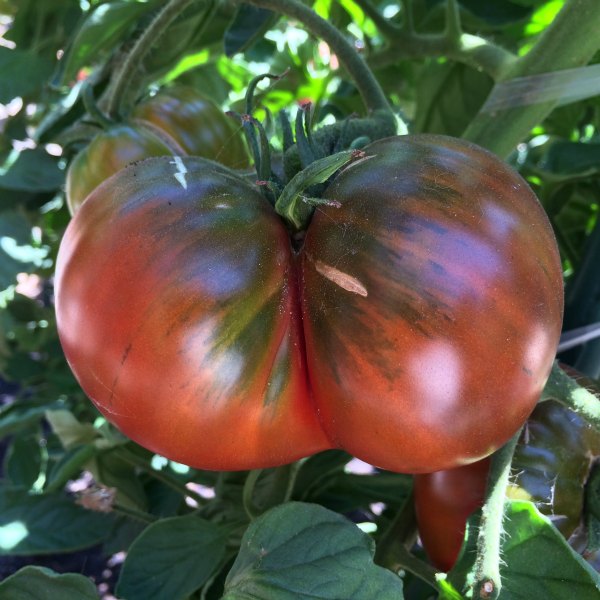
'Black Krim' © Steve Masley
…Click IMAGE to Enlarge

‘Genuwine’ (Heirloom Hybrid, Indeterminate, 70-75 days) is an "Heirloom Marriage" cross between Pink Brandywine and Costoluto Genovese. The cross preserves the great flavor of both parents, while conferring better disease resistance than either parent has on its own, and it produces 2 weeks earlier than the parents, so it's a good choice for short-summer or cool-summer gardens. Strong, indeterminate vines, and constistently productive year after year.
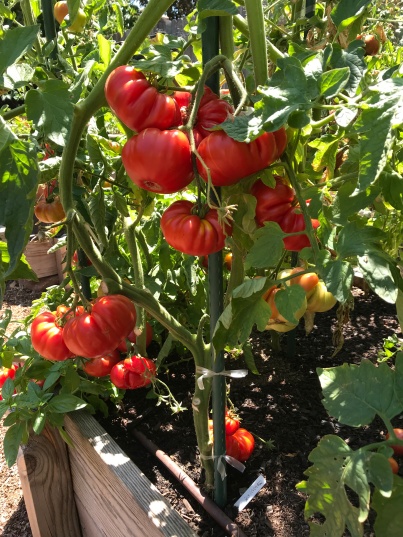
© Steve Masley
…Click IMAGE to Enlarge
Cherry
|
Salad
|
Beefsteak
|
Roma (Paste)
|
Hybrid vs Heirloom
Growing Tomatoes
Sauce (Paste) Tomatoes
Sauce (Paste) Tomatoes are dense Italian plum tomatoes like San Marzano, with sweet, firm flesh, high pectin content, not much juice, and few seeds…the perfect sauce tomato, since it thickens naturally and needs less cooking time to evaporate off excess moisture.
Paste tomatoes hold for a long time on the vine, and their low moisture content gives them extended fresh storage time--they can keep for weeks sitting on a rack on a counter. They're also great for drying, topping pizzas, and oven roasted tomatoes.
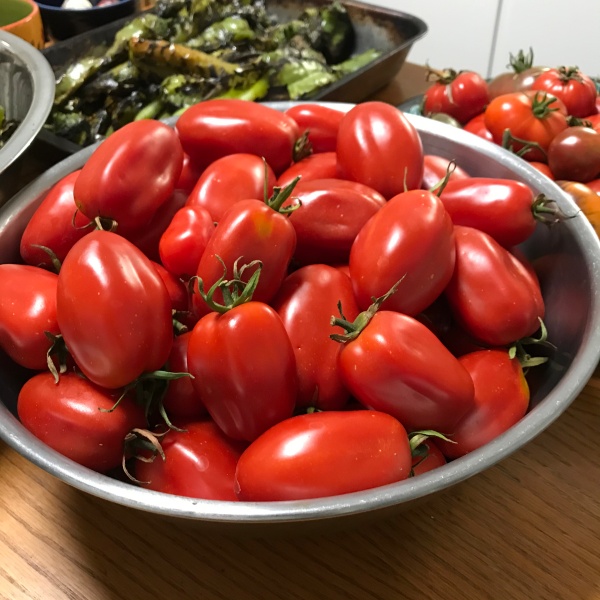
—‘San Marzano’ © Steve Masley

‘San Marzano’ (Open pollinated heirloom, Indeterminate, 85 days), is the classic Italian sauce tomato. It produces high yields of heavy, 1 ½ x 5” (4 x 12cm) fruits that are dense, meaty, and have few seeds. The high pectin content and lower moisture helps to create a thick sauce with less cooking time. Vigorous indeterminate plants.
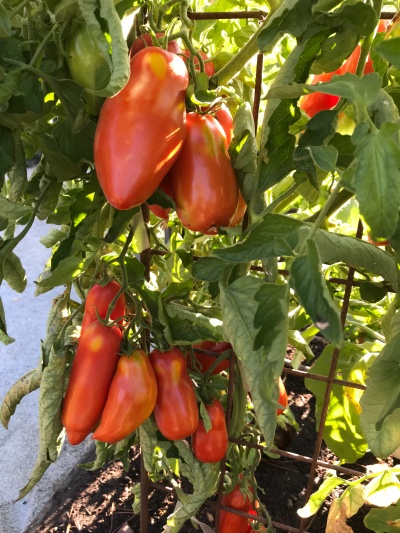
'Gilberte Paste' © Steve Masley
…Click IMAGE to Enlarge

‘Gilberte Paste’ (Open Pollinated Heirloom, Indeterminate, 80 days) is a monster sauce tomato. It produces huge (3" x 7"– 7 x 18cm), heavy paste tomatoes that make excellent sauce, especially if sliced in half and fire-roasted first. We grew one last year that was 4" by 8" (8 x 20cm). I'm sure I took pictures of it, but they might have been on the camera that went through a flash flood in Missouri. I'll get more this photos this year.
Cherry
|
Salad
|
Beefsteak
|
Roma (Paste)
|
Hybrid vs Heirloom
Growing Tomatoes
Hybrid vs. Heirloom Tomato Varieties
|
|
‘Sweet Cluster’ © Steve Masley …Click IMAGE to Enlarge |
Hybrid Tomato Varieties are bred for higher yields, disease resistance, ease of harvesting, or—in the worst case—extended shelf life.
Hybrid tomato varieties are crosses between different cultivars, and there’s little chance they’ll produce true to form from saved seeds—they usually revert to one of the parents, or some random combination of traits instead of the ones selected to increase yield and performance.
For decades, plant breeders and seed companies focused on producing tomatoes that work with large-scale, mechanized production. That meant determinate tomatoes, which are easier and more predictable to harvest, but they went a step further and selected for tomatoes with thick skins and less moisture.
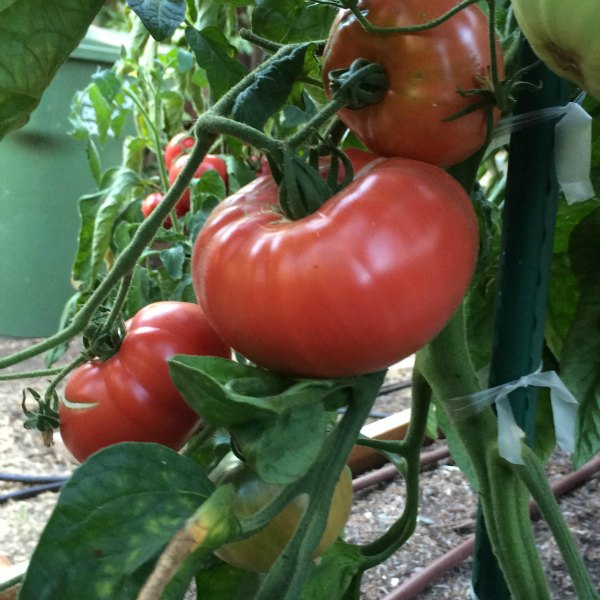
The most egregious example is the “12-mile-an-hour” tomato. These “tomatoes” were bred to withstand the impact of the mechanical tomato harvester (12 miles per hour). They’re harvested just as they’re turning pink, and gassed with ethylene gas to give them a reddish color. Unlike any real tomato, these will last for months after harvest.
|
|
© Steve Masley…Click IMAGE to Enlarge |
Such “tomatoes” are easier to harvest and get to market, so they gradually displaced better tomatoes in supermarkets, and consumers came to accept these mealy imposters because they had no other choice.
Fortunately, home gardeners have always had a choice. If a hybrid tasted great or produced prodigiously, they’d plant it, but if it was mealy and bland, they could ask Mrs. Potreli down the street for some seeds for those rambling, tasty tomatoes from her garden.
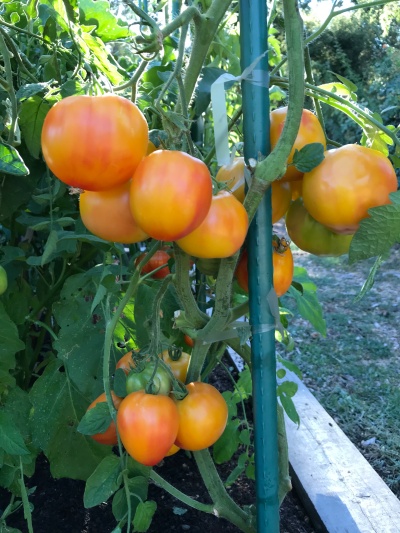
Heirloom tomato varieties, prized for superior flavor or excellent performance under local conditions, have been passed down through families or from neighbor to neighbor and saved for generations. Heirloom tomato varieties are “open-pollinated”, meaning they’ll reproduce true to form from saved seeds.
|
|
with red streaks through the flesh © Steve Masley…Click IMAGE to Enlarge |
These juicy, thin-skinned beauties can’t be shipped long distances, so large-scale tomato farmers—and companies that supply them seed—ignored them. Fortunately, home gardeners and local farmers preserved many from extinction, and thanks to organizations like the Seed Savers Exchange , they’re now more widely available.
When I started growing tomatoes organically, farmers and seed companies were asleep at the switch, and we were losing tomato cultivars at an alarming rate. Planting hybrid tomatoes was considered immoral, a capitulation to agribusiness seed companies.
Now, with the rise of the chef-driven local foods movement and the revitalization of farmers markets and small-scale vegetable farming and gardening, heirloom tomato varieties are avidly pursued, not just preserved.
Some organic gardeners remain heirloom tomato purists, and turn their noses up at the thought of growing hybrid tomato varieties, or hybrid varieties of any vegetable.
I am not among them. I’ve always grown tomatoes in challenging, cool-summer climates, where a limited number of tomatoes will work. If an heirloom variety produces well in my climate, I’m happy to grow it, but I’m just as happy growing a hybrid tomato variety that produces bumper crops of delicious tomatoes.
Recommended Heirloom
Tomato Varieties
These are the heirloom tomato varieties I’ve grown, and can recommend (by type of tomato):
Heirloom Cherry Tomatoes: ‘Black Strawberry’
Heirloom Salad Tomatoes: 'Pantano Romanesco', ‘Pink Boar’, ‘Stupice’, 'Purple Zebra', ‘Green Zebra’, and ‘Valencia’.
Heirloom Beefsteak Tomatoes: 'Cherokee Purple', ‘Pink Brandywine’, ‘Caspian Pink’, ‘Costoluto Genovese’, ‘Black Krim’, ‘Hillbilly’, ‘Pink Berkeley Tie Dye’, and ‘Genuwine’.
Heirloom Paste Tomatoes: 'San Marzano' and 'Gilberte Paste'
Descriptions of these varieties are found under each type of tomato, above.
Cherry
|
Salad
|
Beefsteak
|
Roma (Paste)
|
Hybrid vs Heirloom
Growing Tomatoes
Tomato Varieties
|
Starting Tomatoes from Seed
Growing Tomatoes
|
Tomato Hornworms
|
Other Tomato Pests
Tomato Diseases
|
Growing Heirloom Tomatoes
Growing Tomatoes in Cool-Summer Gardens


Copyright © 2009-2025, by Steve Masley, Grow-it-Organically.com
All rights reserved

HOME | About Us | Contact Us | Privacy
New! Comments
Have a question or comment about what you just read? Leave me a comment in the box below.